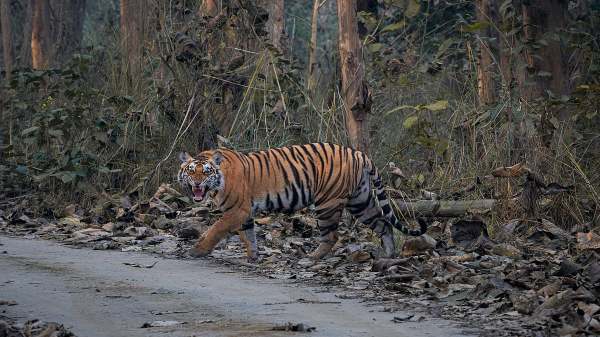
In a landmark judgement, the SC of India has banned mobile phones for visitors in national parks on safaris. Does this change how we see wildlife?
Across India's national parks, home to over 3,600 tigers, safaris are the only way to see the big cat in its own habitat. Growing interest among domestic and inbound travellers has sustained micro-economies around parks like Ranthambore, Tadoba, Jim Corbett, Kanha and Bandhavgarh for close to 50 years. But the pressure has also exposed cracks in a system regulated separately by each state's forest department. Despite measures like online permit booking and widened zone selections, safaris in popular parks often turn into a circus, with vehicles racing to catch a sighting.
Viral reels of congestion at sightings recently led to a landmark Supreme Court judgement. In November 2025, the Court banned mobile phones during safaris across all tiger reserves, national parks and wildlife sanctuaries in India. Guests can no longer carry phones on their person; they have to submit them to a locked box carried by the vehicle's guide. Worth noting here that Tadoba Andhari Tiger Reserve had already banned phones on its own in 2018.
"While it's difficult to point to a single reason for this ban, it's important to understand how having a cellphone during a safari changes visitor behaviour," says Varun Taneja, Brand Head, Sublime Wilderness Odyssey. Many guests, he explains, consider a safari "successful" only if they've spotted the biggest predator, and the added goal of a great shot or a "selfie with a tiger" pressures guides and drivers into chasing sightings and getting closer, raising safety risks for humans and wildlife alike.
Smaller parks saw more pushback. This author heard a group of guests at a zone adjoining Corbett National Park try to bribe their guide into letting them keep their phones. He refused.
Contact to : xlf550402@gmail.com
Copyright © boyuanhulian 2020 - 2023. All Right Reserved.